
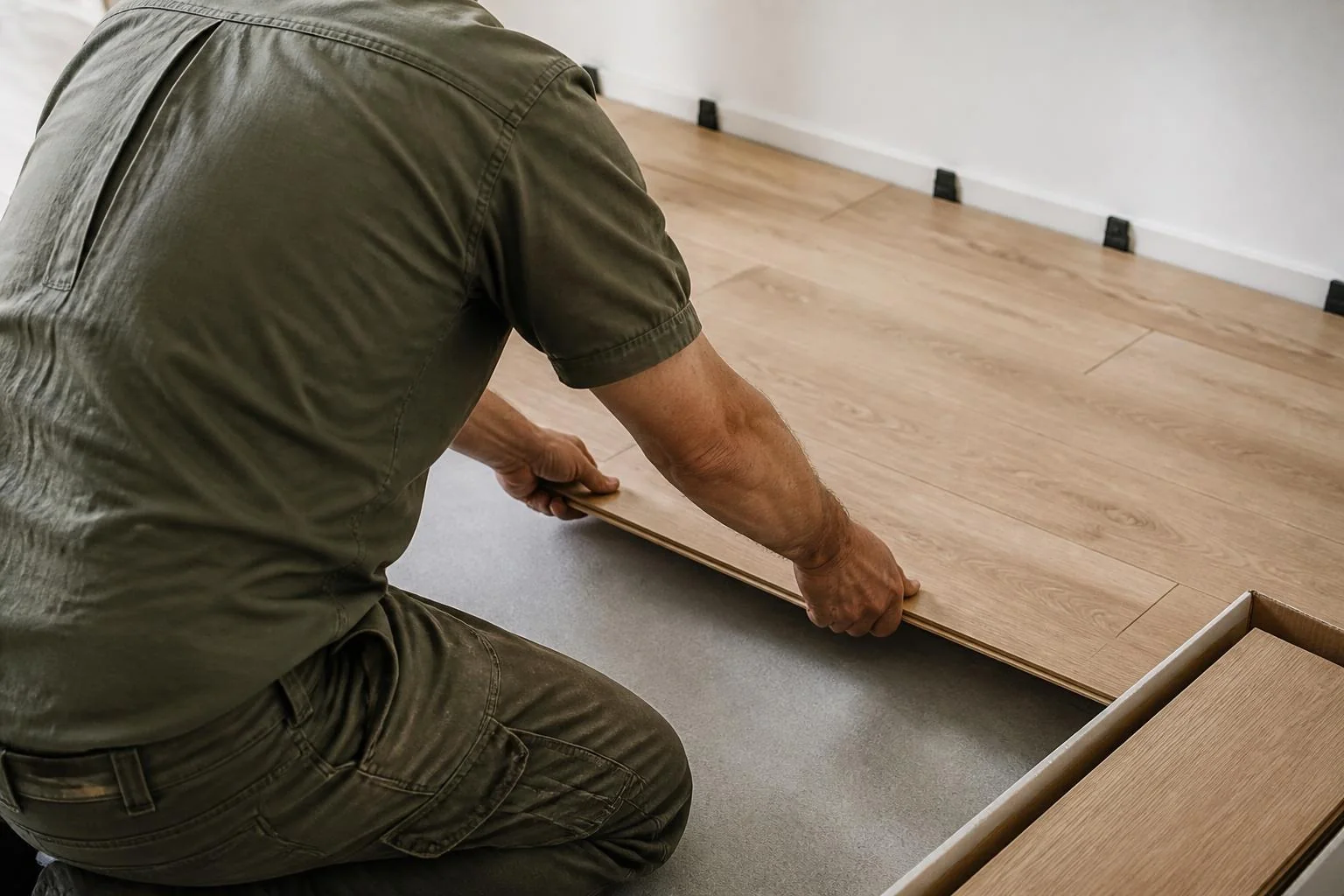
Laminate still carries a reputation from older floors: hollow, plasticky and ruined by the first spill. Today’s laminate is a better product. It’s hard, scratch-resistant and convincing to look at, and in the right room it’s one of the best values in flooring.
The usual question is laminate or LVP. They look alike in the box, but they’re built differently, and the difference matters in a mountain house. Here’s an honest comparison from the crew that installs both in Cle Elum homes and rentals.
How they’re built
Laminate has a dense wood-fiber core, a printed layer that carries the wood grain and a hard, clear wear layer on top.
Luxury vinyl plank (LVP) has a vinyl or rigid composite core with a printed layer and a vinyl wear layer. The plank itself doesn’t soak up water.
Laminate vs LVP, side by side
- Water. LVP wins. A puddle by the door is no problem for a waterproof plank. Laminate’s wood-fiber core can swell if water sits on the seams. Many newer laminates are water-resistant, but resistant isn’t waterproof, so check the rating.
- Scratches and dents. Laminate’s surface is harder and stands up well to claws and dragged chairs. LVP resists scratches too, but softer vinyl can dent under heavy furniture.
- Feel and sound. Laminate feels firmer and more like wood underfoot. LVP is softer and quieter. A good underlayment helps both, and without one, laminate can sound hollow.
- Look. Both can pass for wood. Laminate often has the edge in realistic grain and texture.
- Temperature. Vinyl expands and contracts more with heat and cold. In a sunny room with big windows, or a second home where the heat gets turned way down, check the product’s temperature range. Laminate handles temperature better but cares more about humidity.
- Cost. Both usually come in under hardwood. Within each, price follows thickness, wear layer and core quality. In a rental, the cheapest plank on the shelf is rarely the bargain it looks like.
Where laminate fits best
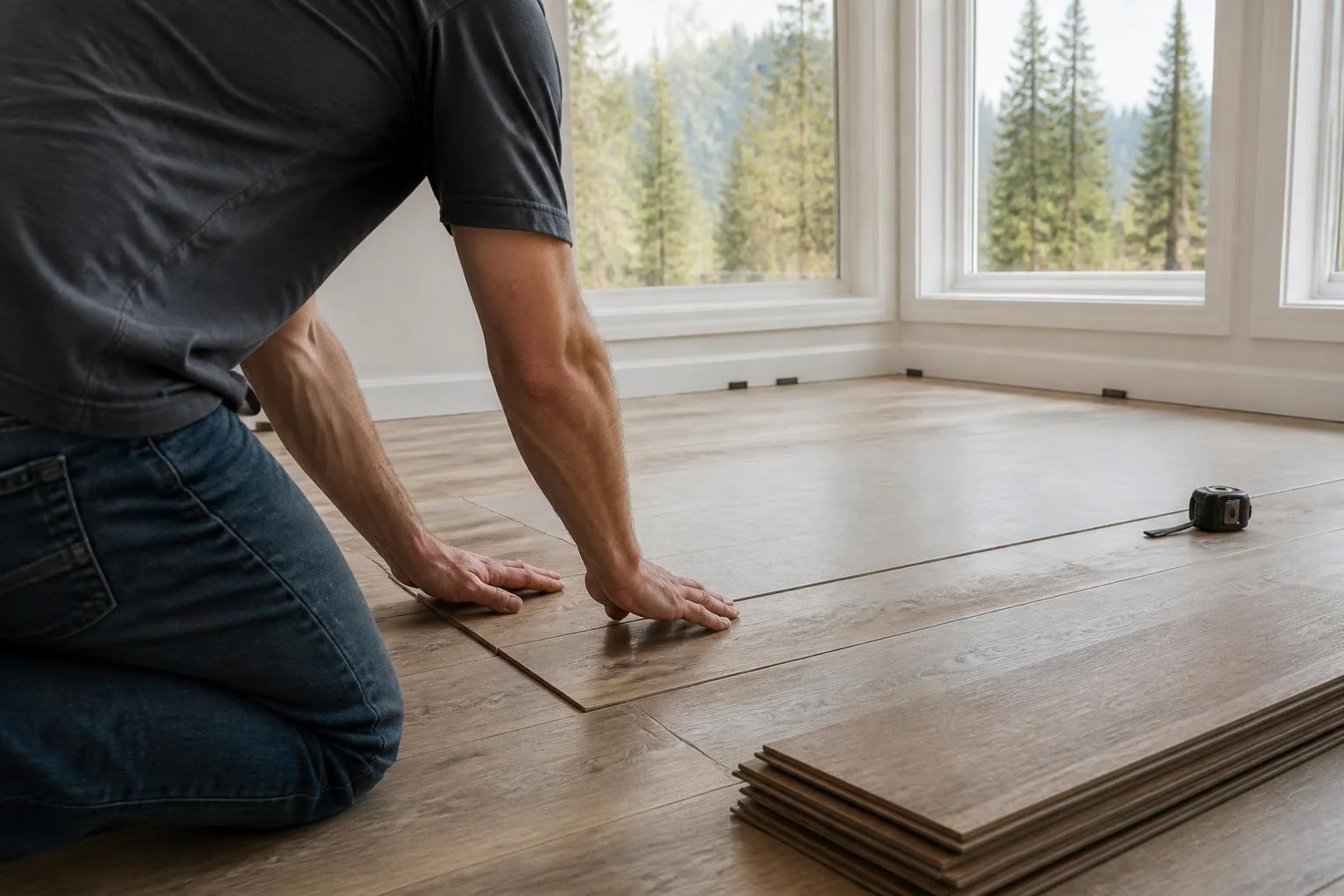
Laminate shines in dry rooms that see a lot of traffic: living rooms, bedrooms, hallways, lofts and home offices. It’s a good fit for rental bedrooms and living spaces too, where a hard surface stands up to suitcases and furniture getting moved around.
Where it doesn’t belong: bathrooms, laundry rooms, mudrooms and the main entry where snowmelt lands. Put LVP or tile there and start the laminate beyond it. Our flooring installation page covers all four types we install.
Installing laminate right
Most laminate problems come from the install, not the product. Laminate floats, so it needs a flat subfloor, the right underlayment, an expansion gap at the walls hidden under the baseboard and proper transitions at doorways. We let the flooring acclimate per the manufacturer and make sure the subfloor is flat and dry before the first row goes down.
We’ll also help you compare brands and products, so you’re choosing on wear layer and water rating, not just color.
Brandon & his team are fantastic. The crew is cheerful & personable. Many homes in our neighborhood use Swiftwater Earthworks for jobs large & small.
Still deciding?
If you’d rather have the real thing, see hardwood floors for solid versus engineered. If the floor is one piece of a bigger room refresh, look at small remodels. Outfitting a rental? Our vacation home care keeps an eye on the place between stays.
Ready to price out your rooms? Ask for a free quote or call 509-260-3659.