
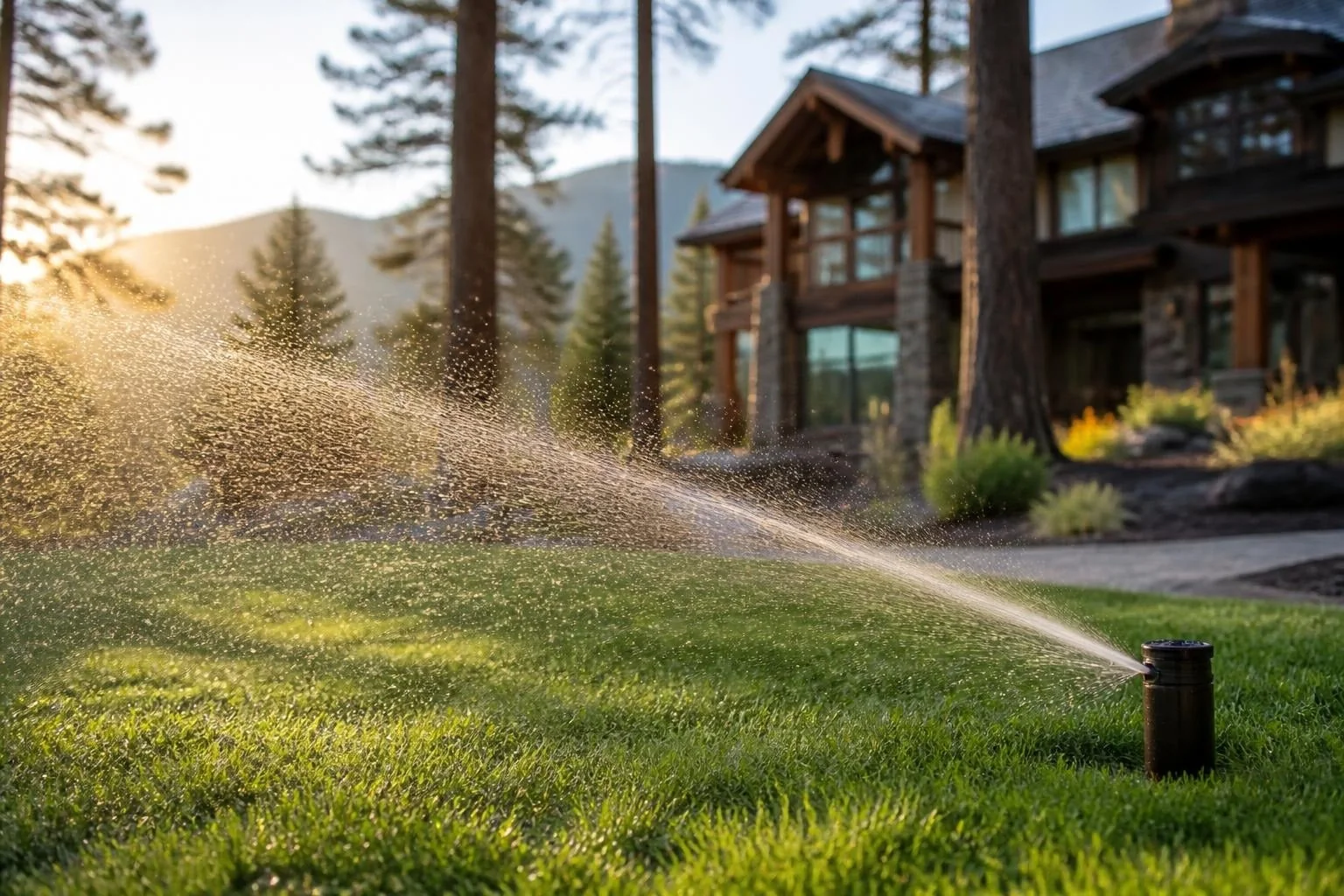
Sprinklers are the work our customers mention most in their reviews. A good system puts water where the plants need it, stays off the driveway and the siding, and comes through a mountain winter ready to run. We design and install new systems around Cle Elum, fix the ones that leak, and rework the ones that no longer fit the yard.
“Scott, Brandon, and the team were fantastic to work with! From closely working with us on our irrigation system and lawn, to the open communication throughout, and quality finished product.” — Lauren B.
Design and installation start with a walk-through
Before we pick a single head, we walk the property. We look at where the lawn and beds are, which areas bake in the afternoon sun and which stay in shade, how the ground slopes, and where water should never land: the driveway, the deck, the side of the house. That site assessment is what keeps you from paying to water pavement.
Then we lay out zones so plants with different needs aren’t sharing a schedule, and choose the right head for each spot:
- Rotary heads for larger lawns, throwing slow, rotating streams that give the water time to soak in.
- Fixed spray heads for smaller or oddly shaped lawn areas and tight corners.
- Pop-up heads that sit flush with the ground when the system is off, out of the way of mowers and feet.
- Misting for beds and new plantings that need a gentle, even drink.
On a slope, water runs off before it soaks in, so those zones get shorter cycles, and the sunny side of the house runs on a different schedule than the shady side.
Repairs, leaks and adjustments
Most sprinkler problems show up as a pattern in the yard: a patch that never dries out, a brown strip between heads, a head throwing water into the road, or a zone that won’t shut off. We track down the cause, fix leaking lines and fittings, replace broken heads, and adjust the spray so water lands on the lawn and beds where it belongs.
Reworking a system you already have
Yards change. A new patio goes in, part of the lawn becomes planting beds, trees grow and start blocking the spray. You don’t have to tear the whole system out. We can reconfigure what’s there: move heads, change head types, split or combine zones and cap lines you no longer need. If you’re swapping thirsty lawn for native plantings, that’s the moment to rethink the water too.
Spring start-ups
Once the snow is off and the ground has thawed, we bring the water back on slowly, run each zone, look for heads that cracked or got knocked out of line over the winter, find leaks before they flood a bed, and set the season’s schedule. Everyone wants their water on in the same few weeks, so it pays to get on the list early.
What freeze-thaw winters do to a system
Water left in pipes, valves and heads expands as it freezes and can split fittings and crack heads. Frost heave can push heads up or tip them out of level, and lines laid too shallow take the worst of it. That kind of damage usually hides until the first spring run. Sprinkler care through the seasons is part of our landscape maintenance work, so if you’d rather not keep track of it yourself, ask.
We work on systems all over the upper county: older yards on Roslyn’s hillside streets, second homes in Suncadia where the controller has to do its job while the owners are away, and cabins out by Easton that can sit empty for weeks.
Planning a new landscape? Plan the water with it
Irrigation is best designed alongside the landscape. Lines and valves go in, trenched by our own crew, before patios, walkways and beds are finished, so nothing gets dug back up later. When we draw a landscape design, the water plan is part of it.
For a new or reworked system, book a free design consult. For a repair or a spring start-up, call 509-260-3659.