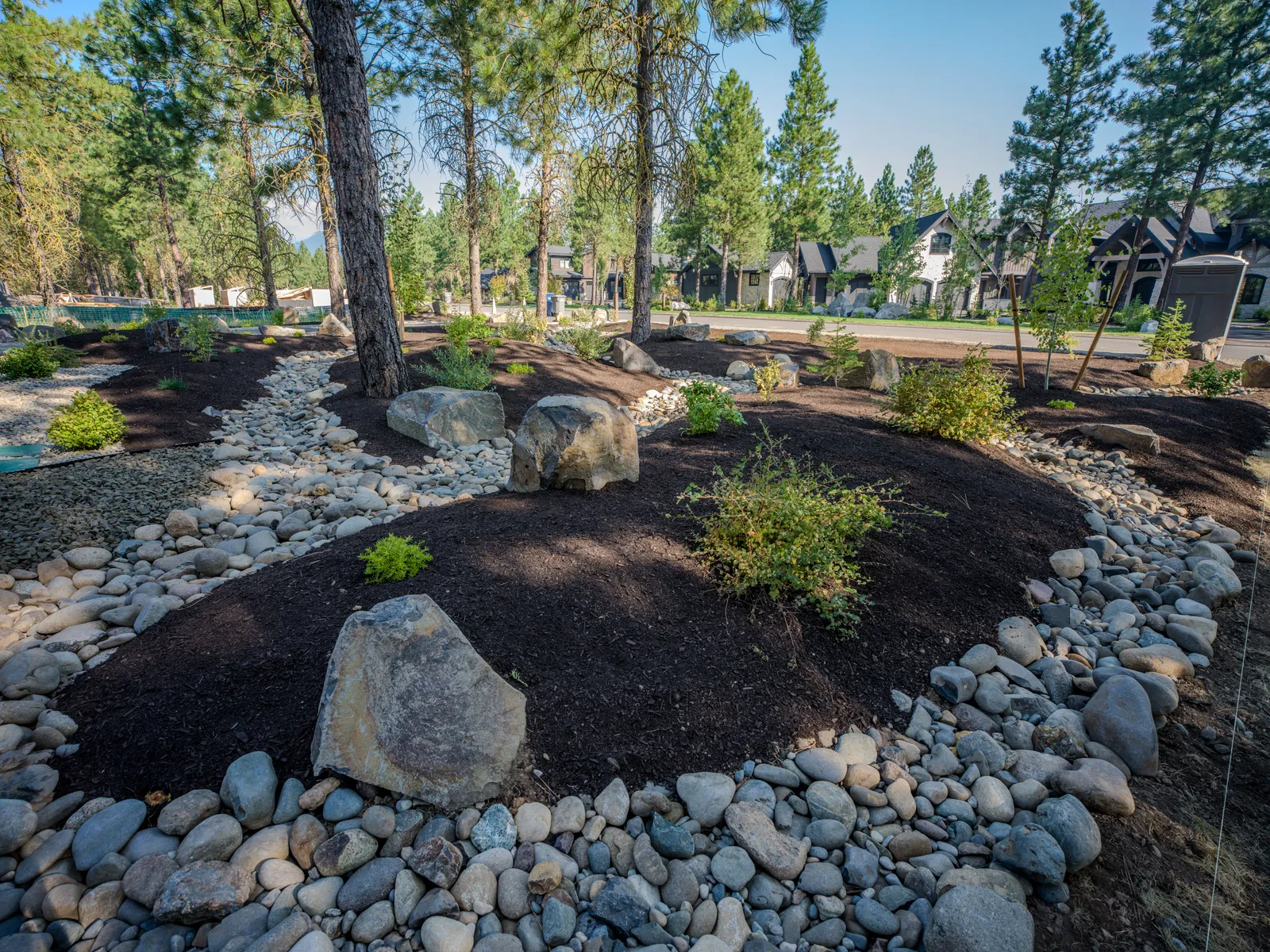
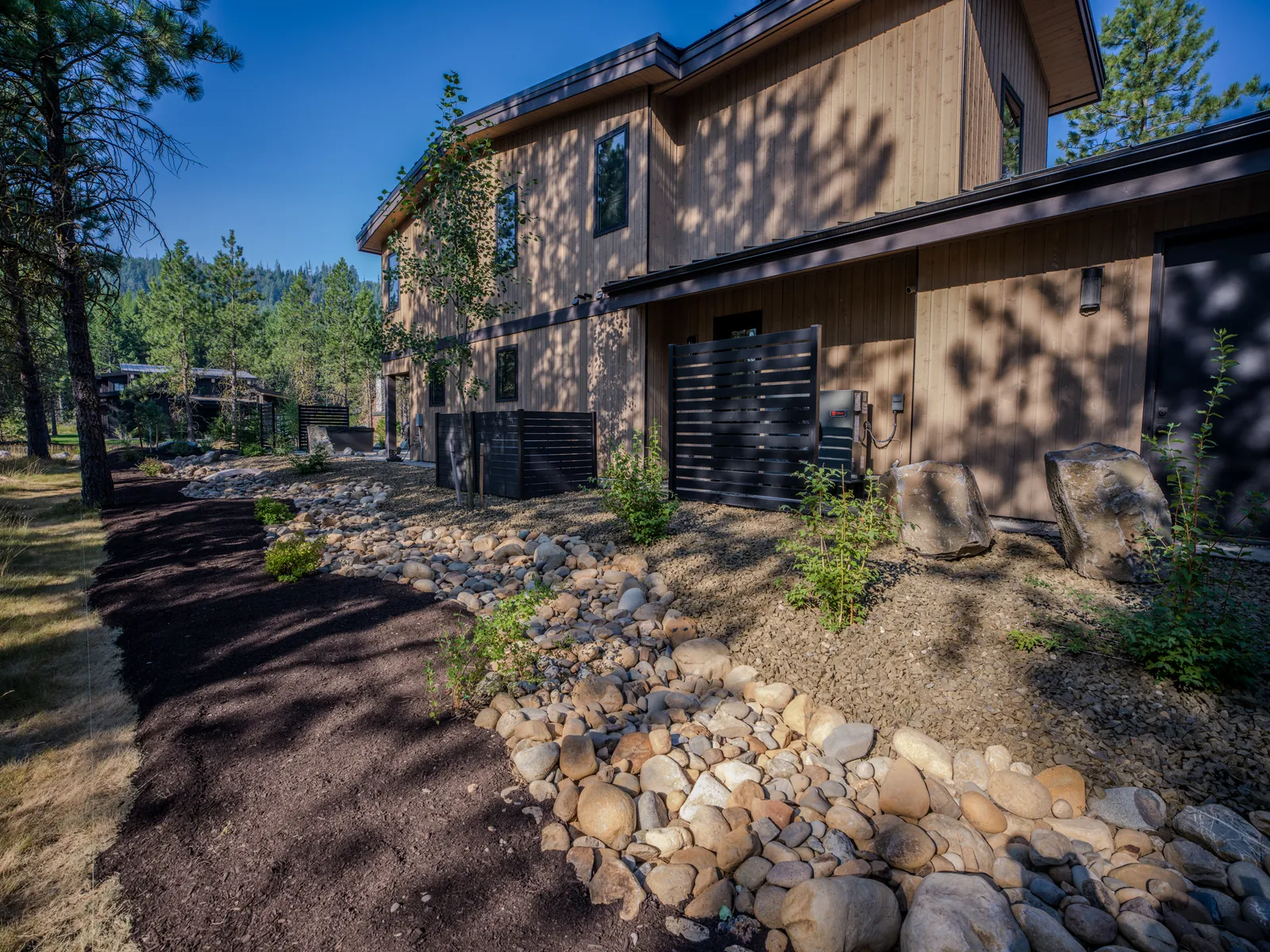
If there’s one thing that shows up on nearly every job we do, it’s a dry creek bed. Up here, water arrives in a rush: snowmelt in the spring, a thunderstorm in July, a roof shedding a hard fall rain. It has to go somewhere. A dry creek gives it a path away from your house, and the rest of the year it looks like a streambed that’s always been there.
How a dry creek works
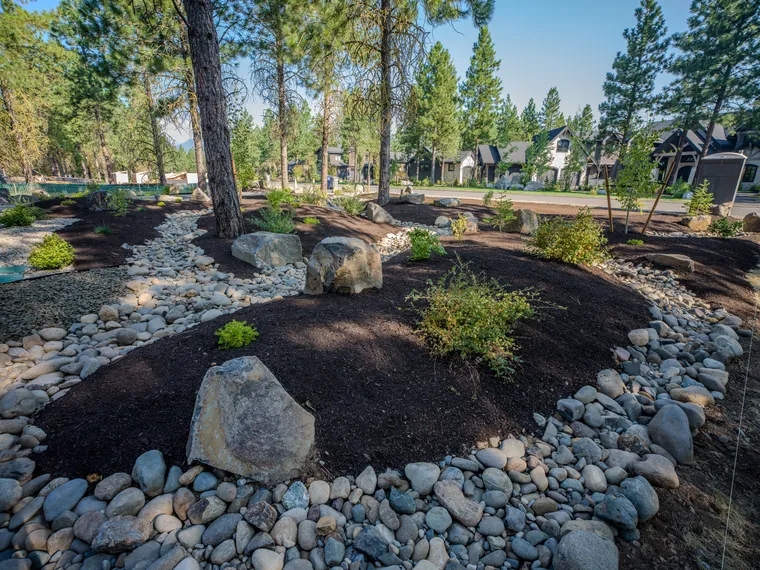
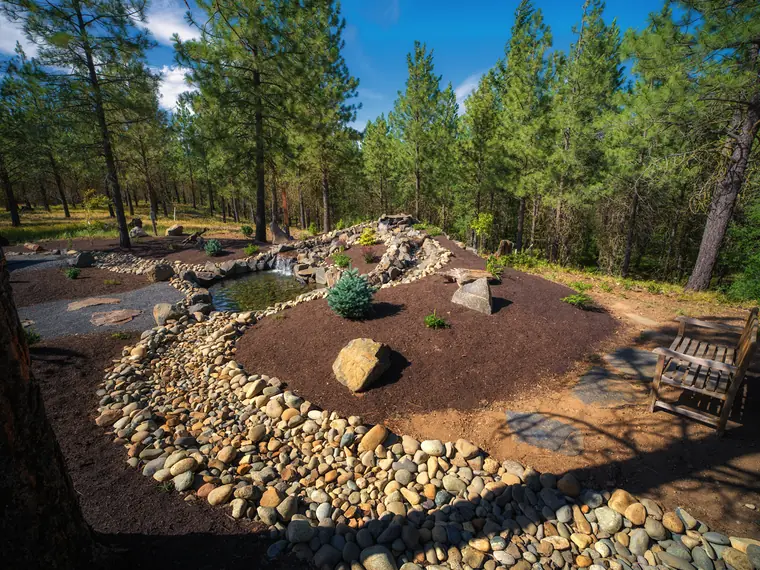
A dry creek is a shallow channel shaped into the grade and lined with river rock. When water comes, it follows the low line of rock instead of cutting across your yard. The rock slows the water down and keeps the soil underneath from washing out.
The difference between a creek that works and a ditch full of rock is in the details:
- It follows the land. We read where water already wants to go and shape the creek along that line, not against it.
- Mixed rock sizes. Bigger stones at the bends and edges, smaller rock in the bed, so it holds when the flow is strong and looks natural when it’s dry.
- A real outlet. Every creek has to end somewhere safe: a lower part of the property, a swale or a drainage ditch.
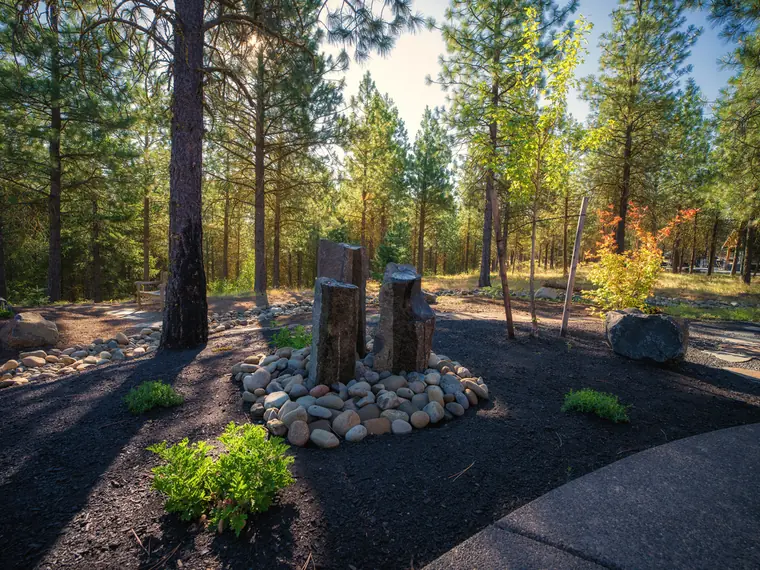
- Planted edges. Boulders and native plantings along the banks make it part of the landscape, not a scar through it.
In late spring a creek might carry melt for days at a time. In August it’s a curving line of river rock through dry beds. It should look good both ways.
French drains, swales and regrading
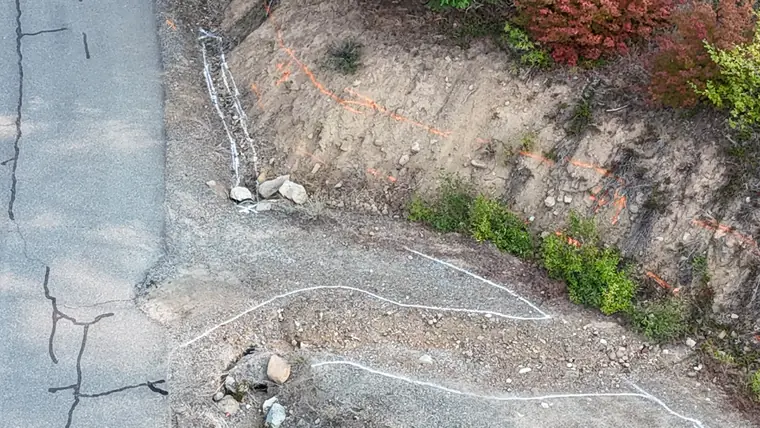
Not every water problem needs to be seen. A French drain is a gravel trench with a perforated pipe that collects water below the surface and carries it away, handy along the side of a house or under a soggy corner of the yard. A swale is a broad, shallow dip that guides surface water gently across the property. Ditching and regrading move water away from the home on a bigger scale. All of them depend on careful trenching and grading, which our own operators handle as part of the project.
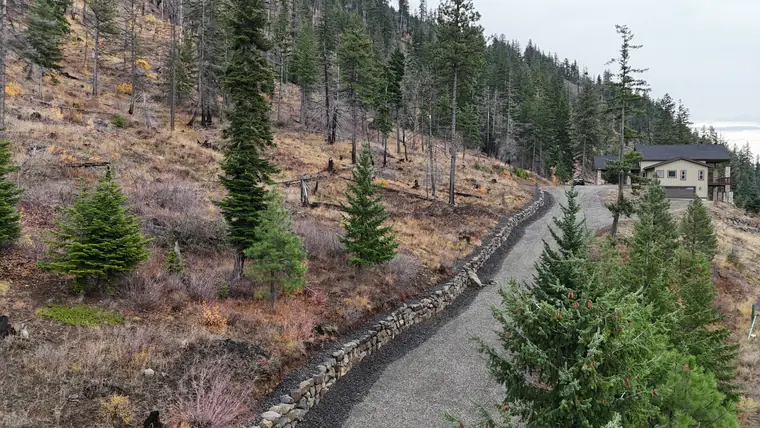
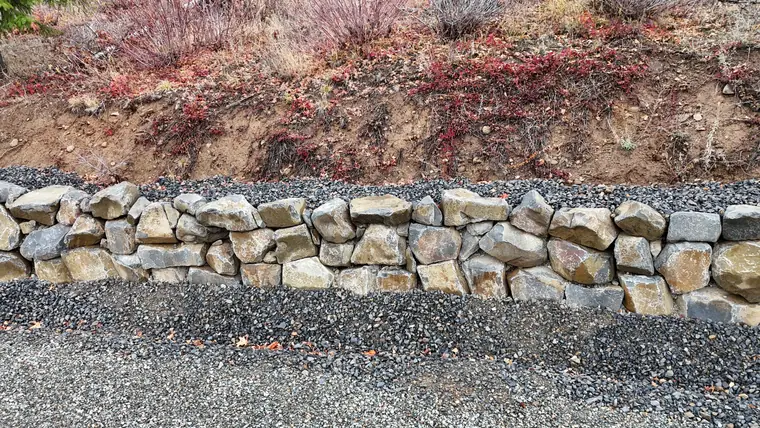
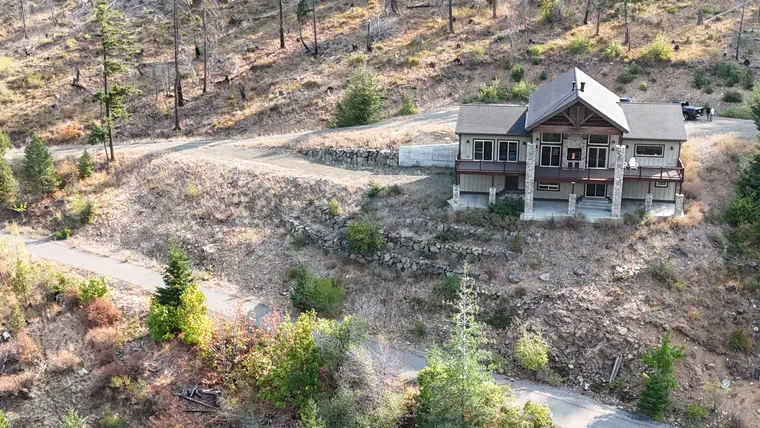
On the Ronald rockery wall job, at a home that flooded every year, we graded the driveway and dug a deeper drainage ditch along with the wall. Less than a month later, record rain came through, and the wall held.
They brought the vision we had for our property to life. Professional, courteous, on-time, AND on budget. These guys are the real deal.
Tumble Creek: drainage built into a new home’s landscape
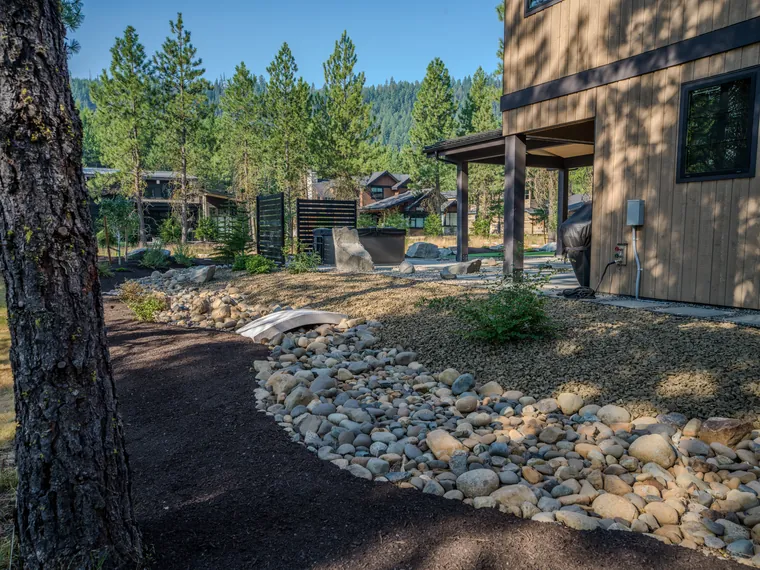
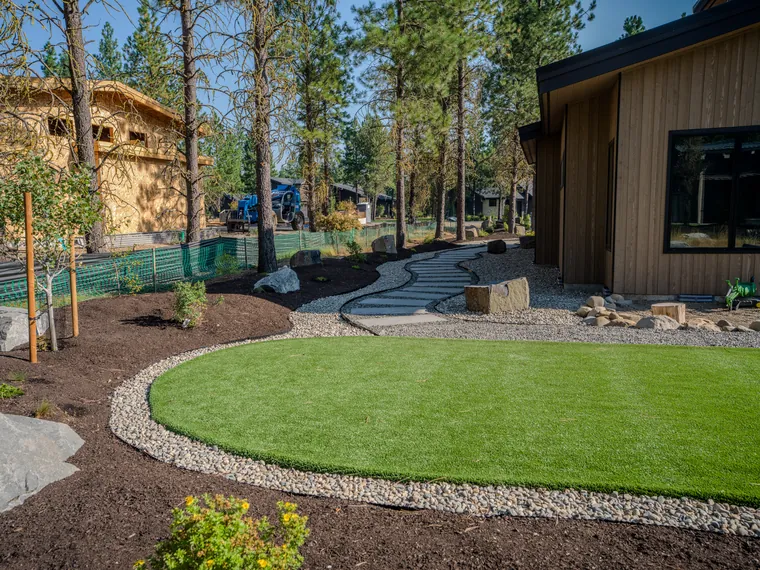
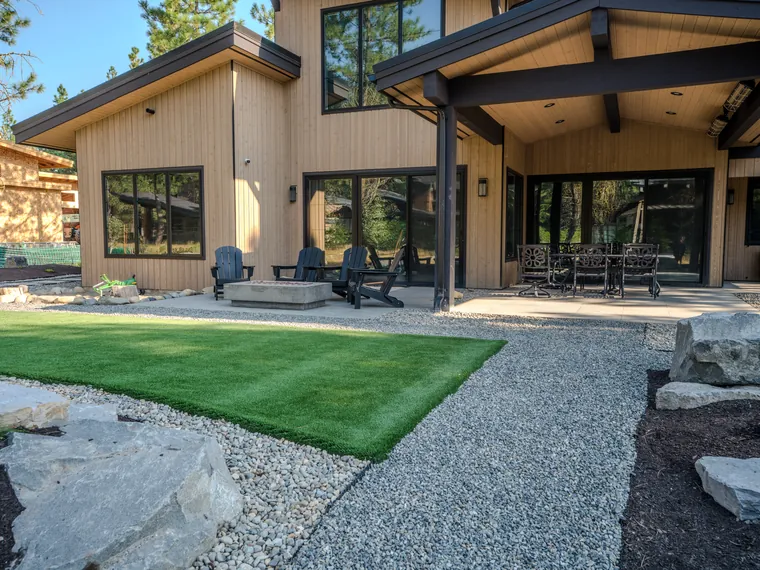
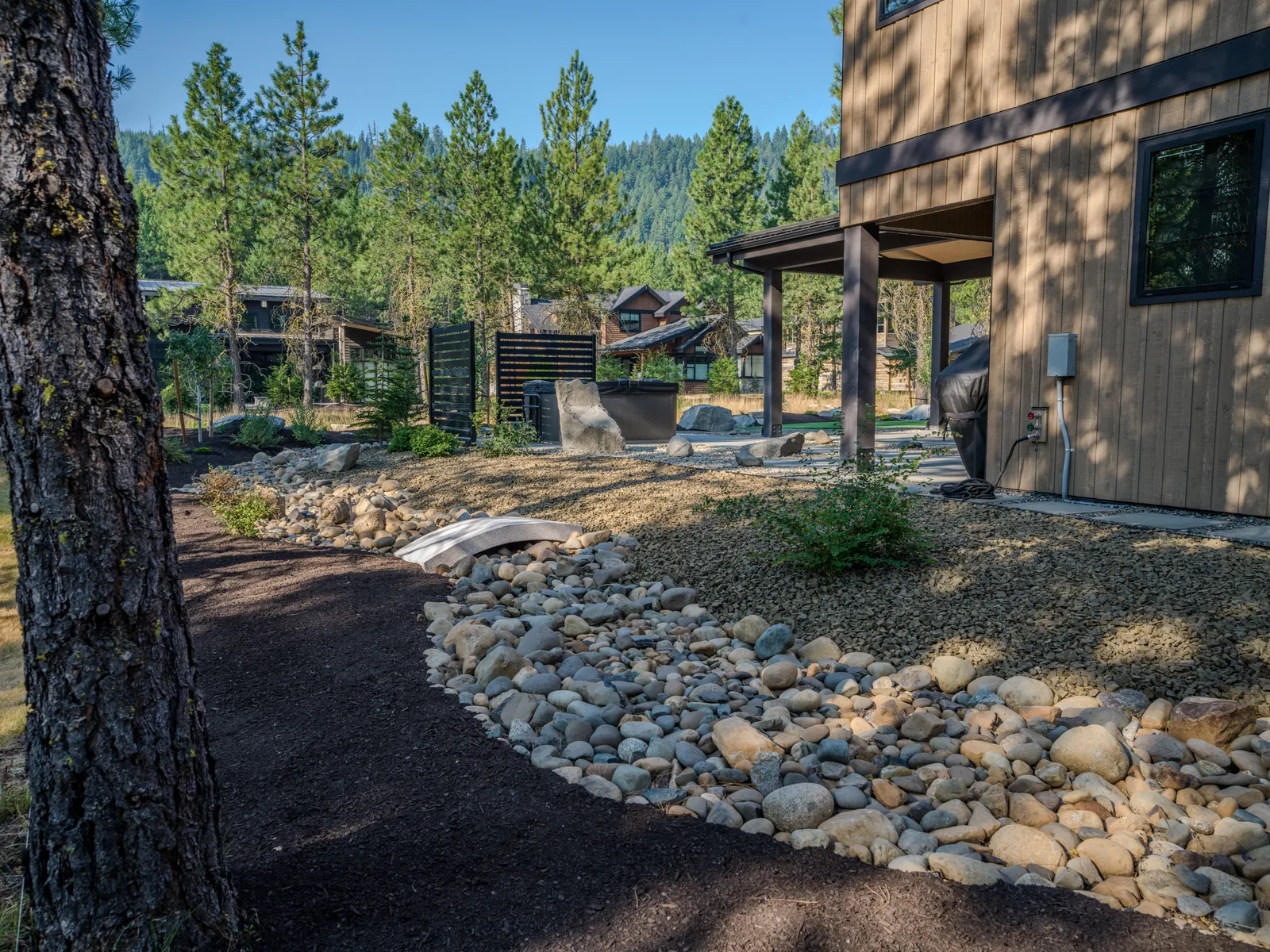
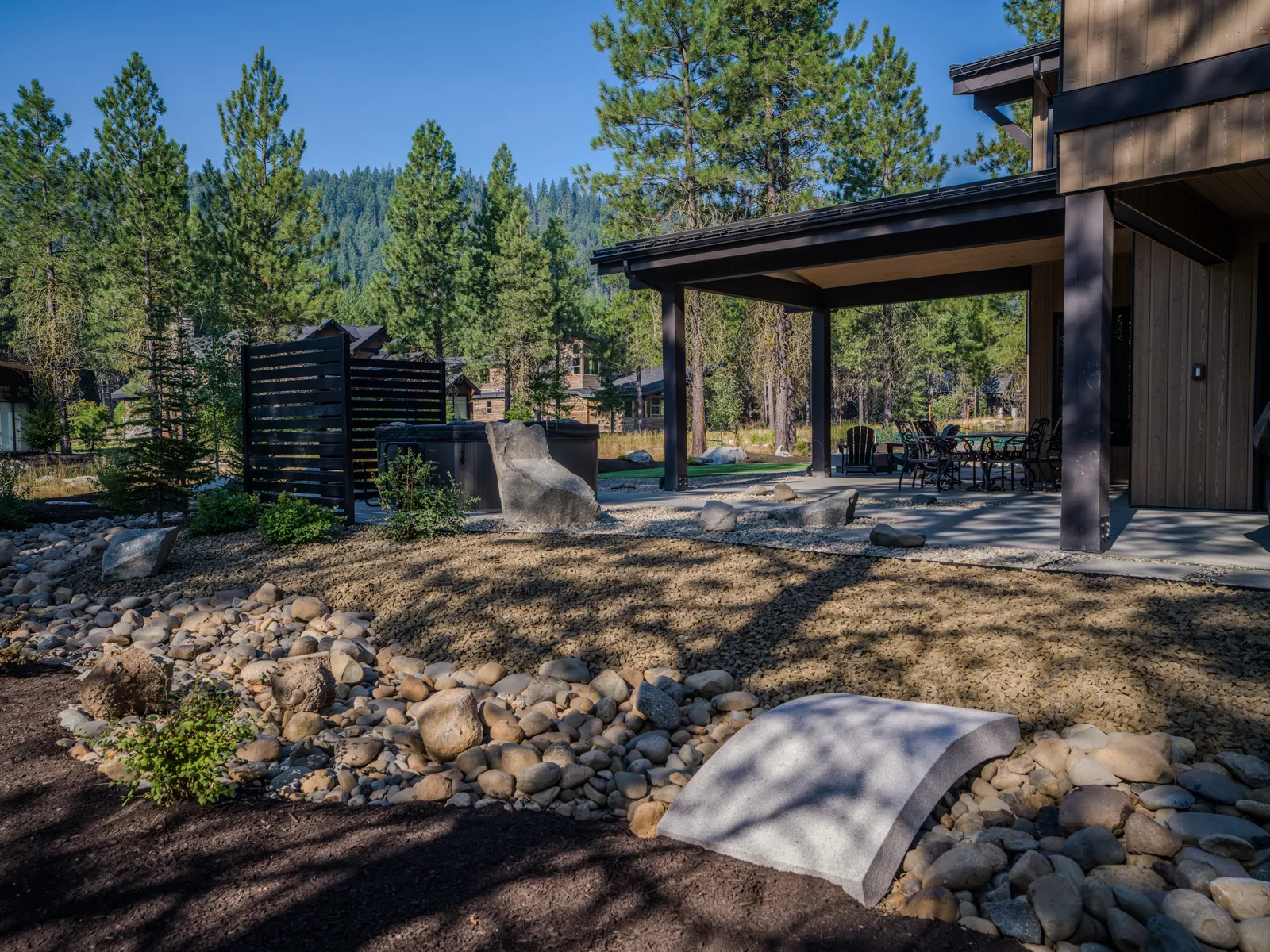
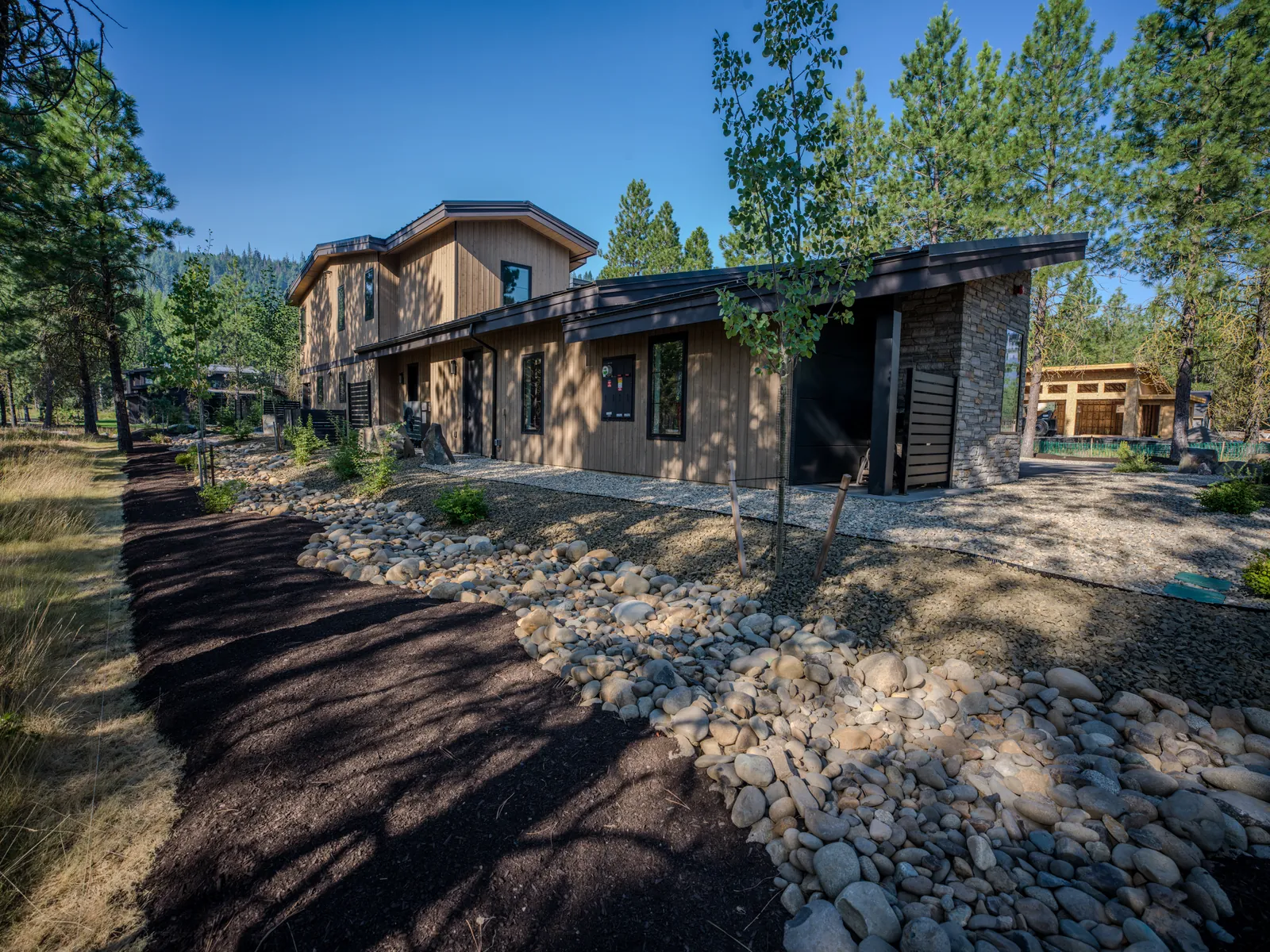
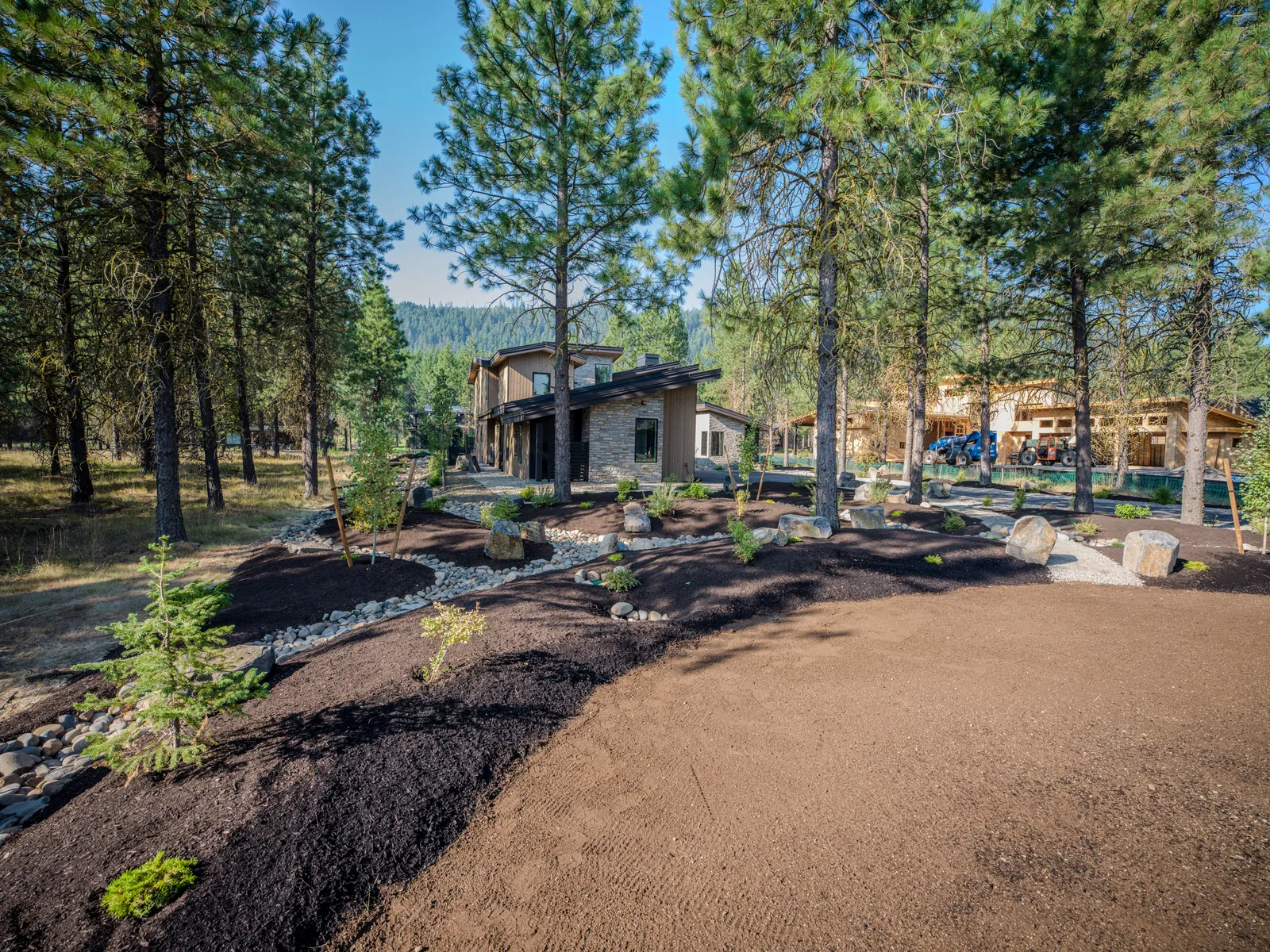
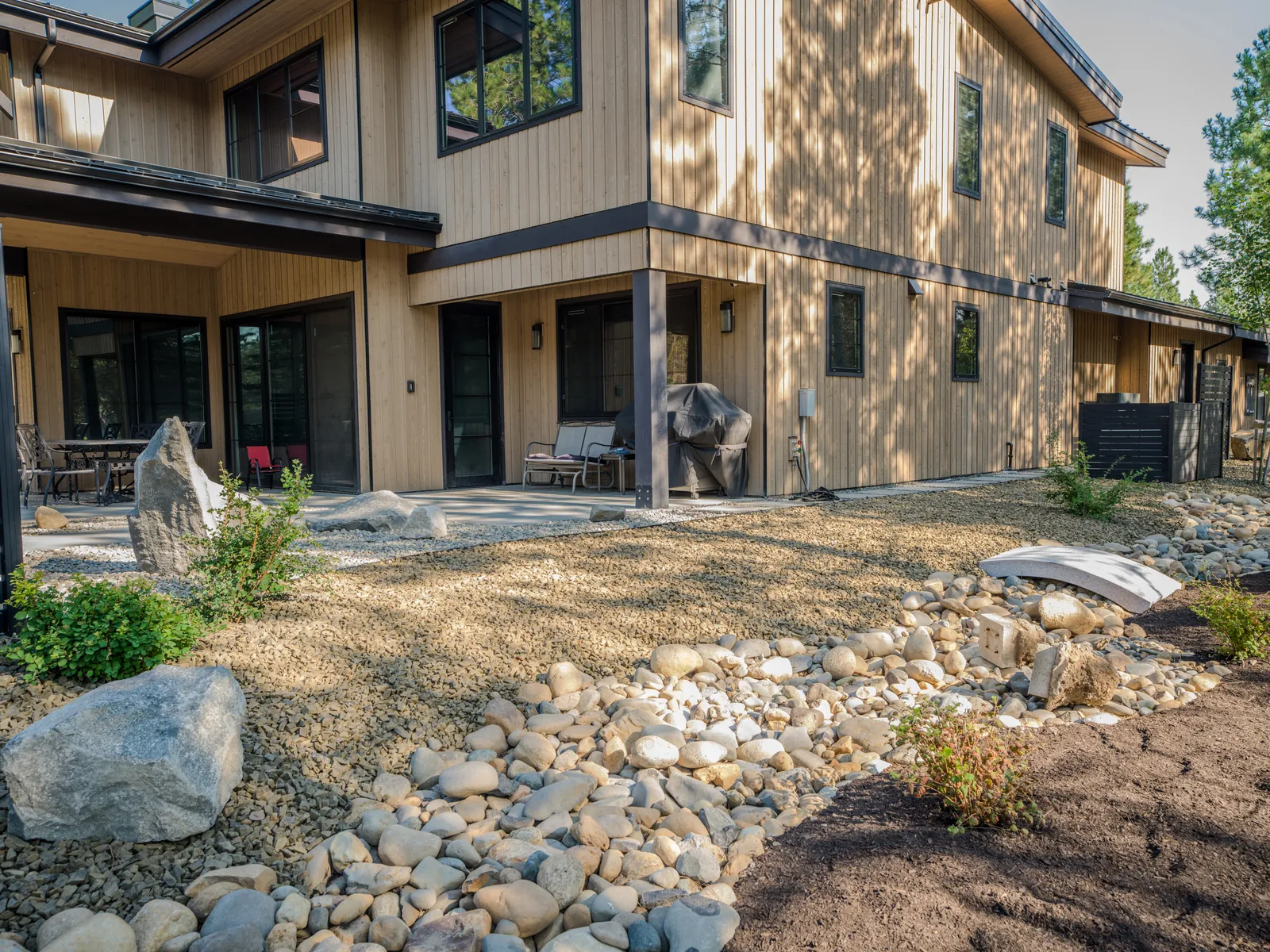
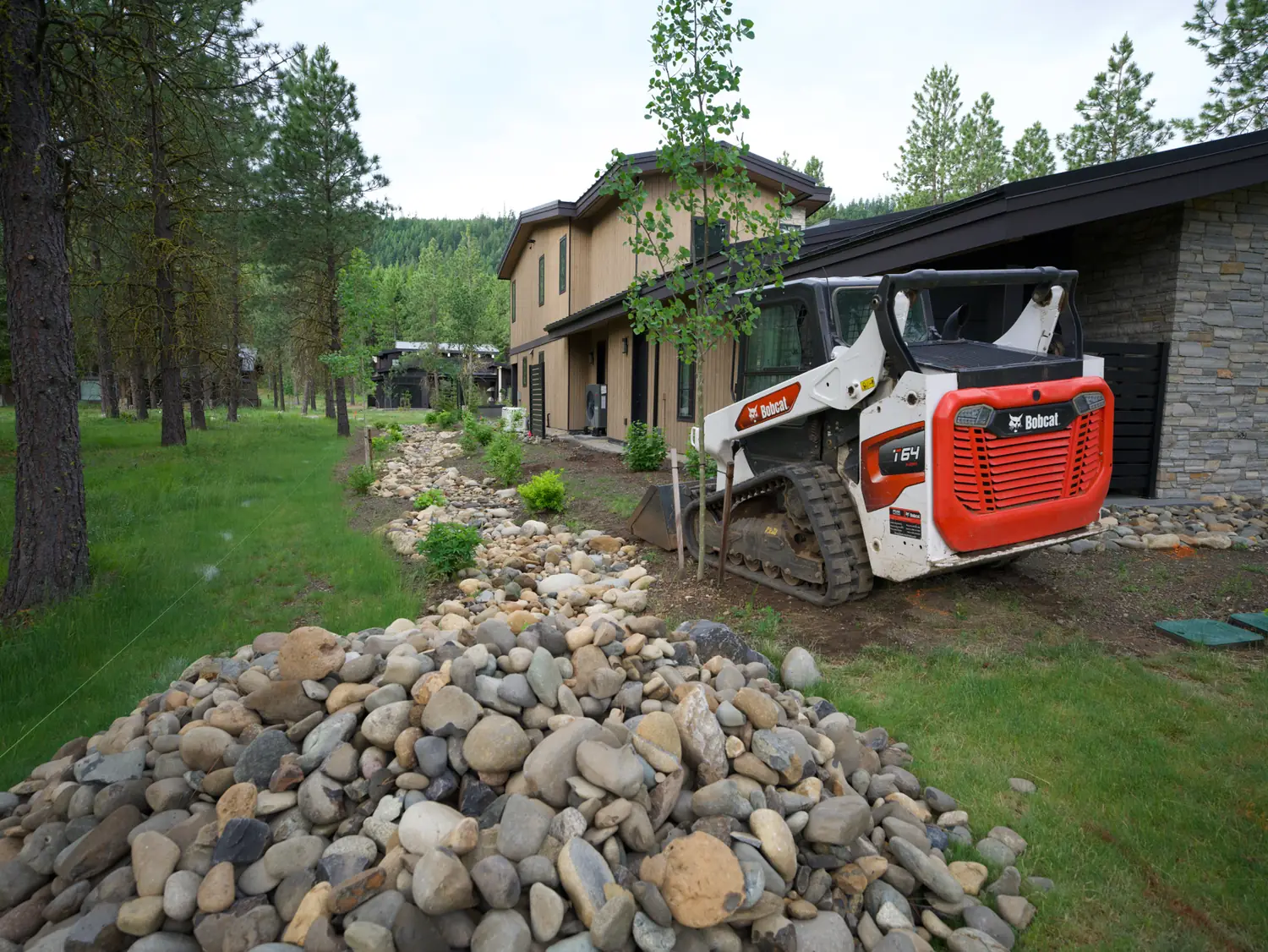
At a newly built home in Tumble Creek, finished in summer 2026, river-rock dry creek beds wind around the house and run along both sides. A small footbridge crosses the creek beside the covered back patio. The creeks tie into mulch beds and berms with boulders, young spruce and aspens, so moving water and shaping the yard turned out to be the same job. See the dry creek and new-home landscape.
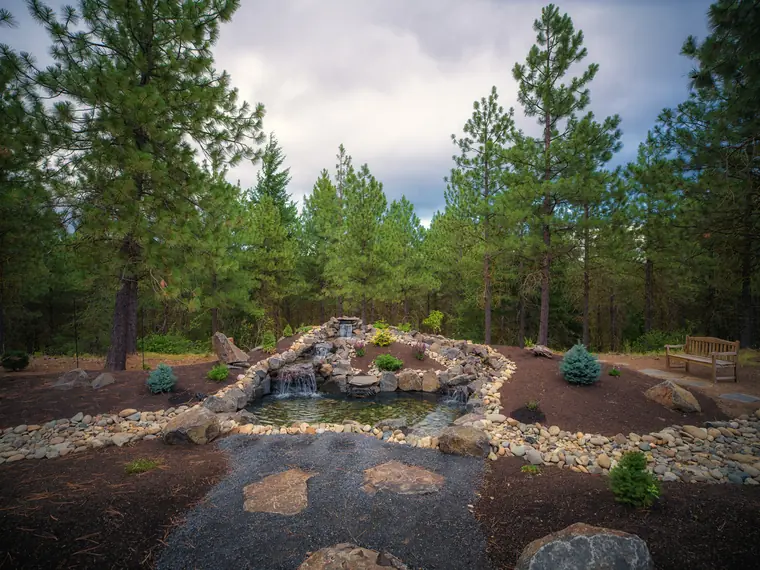
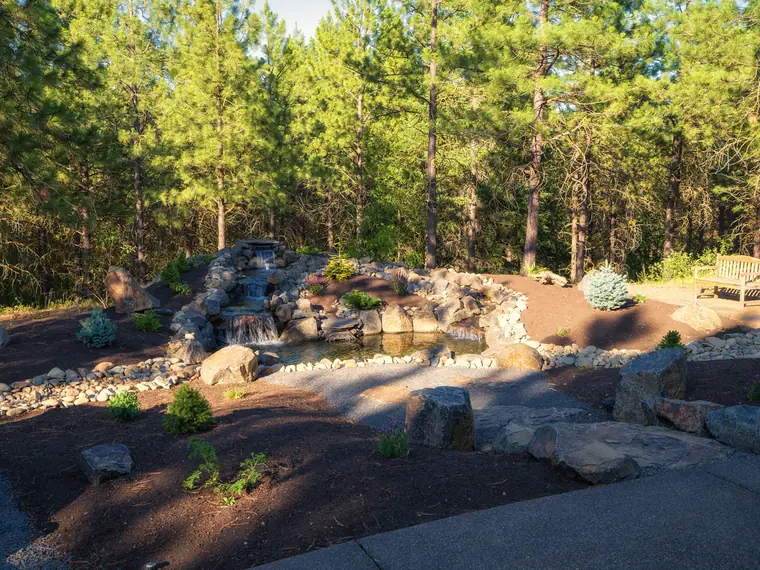
On the earlier Tumble Creek pond project, dry creek beds feed in from both sides of the property and wind through the woods into beds of drought-resistant pines, groundcovers and native flowers. Even the hot tub area is bordered by a section of dry creek outlined with small rock.
Got water where you don’t want it? Book a free design consult or call 509-260-3659. Spring melt is easier to plan for in winter.